
When should I tell my child they have ADHD?
It’s one of the most common, and most emotional questions parents ask. And there’s no single answer that fits every child or family. But here’s what can help.
Wait long enough to ground yourself… but not so long that shame sneaks in.
You don’t need to have all the answers before you talk to your child. But it’s okay to give yourself a moment first. Sit with the news. Learn a little. Talk to a professional or read a few trusted resources. Get your bearings, not because your child needs a perfect speech, but because they’ll feel your steadiness.
The longer we delay these conversations, the more likely our children are to hear whispers, sense tension, or absorb worry. The goal isn’t to deliver a diagnosis like a bombshell. It’s to fold it gently into your ongoing conversations about how their brain works, what helps, and who they are.
ADHD is information — not a sentence.
Your child is still your child. The words just give shape to something you and they were probably already noticing. That they move more. Focus differently. Feel big feelings. Or struggle with certain things that don’t make sense to them. Naming ADHD isn’t about limiting their identity. It’s about unlocking tools, support, and understanding.
So what age is right?
The answer depends on your child’s age, maturity, communication style, and curiosity. For a 5 or 6 year old, a short and reassuring explanation might be enough. For an 11 year old, you may want to offer more space for questions. What matters most is how you say it, with warmth, clarity, and no sense of shame.
This isn’t a one-off chat. It’s the start of an ongoing dialogue that evolves with your child’s age, understanding, and needs.
Try this:
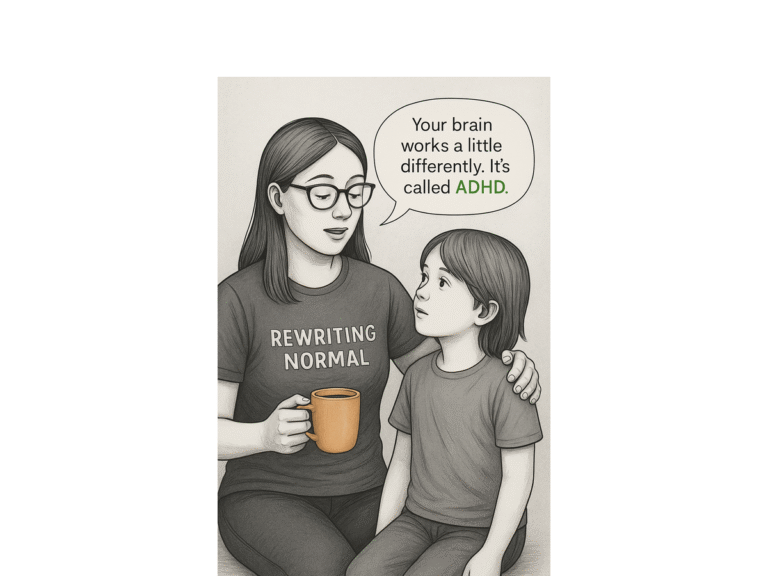
“Hey, I wanted to tell you something important. We’ve been learning more about how your brain works. It turns out it has something called ADHD. That just means your brain works a bit differently, it can make some things harder and some things more awesome. And we’re going to learn more about it together, okay?”
That’s it. That’s a start. You don’t need a TED Talk. You need honesty, safety, and a little softness.
But what if I say it wrong?
You probably will. Most of us do. That’s okay. You can clarify, revisit, repair. What matters more is that your child hears from you, not from eavesdropping, panic Googling, or whispered adult conversations.
So when should I tell them?
When you’re ready to talk honestly. When you can hold space for their feelings.
But also… as soon as you reasonably can.
Because it’s their brain. Their story.
And knowing the truth, in calm, clear, age-appropriate ways, gives them a stronger foundation than confusion, self-blame, or silence ever could.
You don’t need the perfect script. Just a beginning.
(And if you’re still not sure how to explain it? That’s what the next FAQ is for.)
In short:
Tell them when you feel mostly ready, not perfect.
Tell them in your own words.
Tell them with love, honesty, and an open door to keep talking.