
Wait — but I still don’t really understand what ADHD is
You’re not alone.
A lot of us parents get to this point — diagnosis, paperwork, maybe even a follow-up appointment — and realise no one has actually explained ADHD in a way that makes sense to them. Not in plain English. Not with real-life examples. Not in a way that connects the dots.
So here’s the short version.
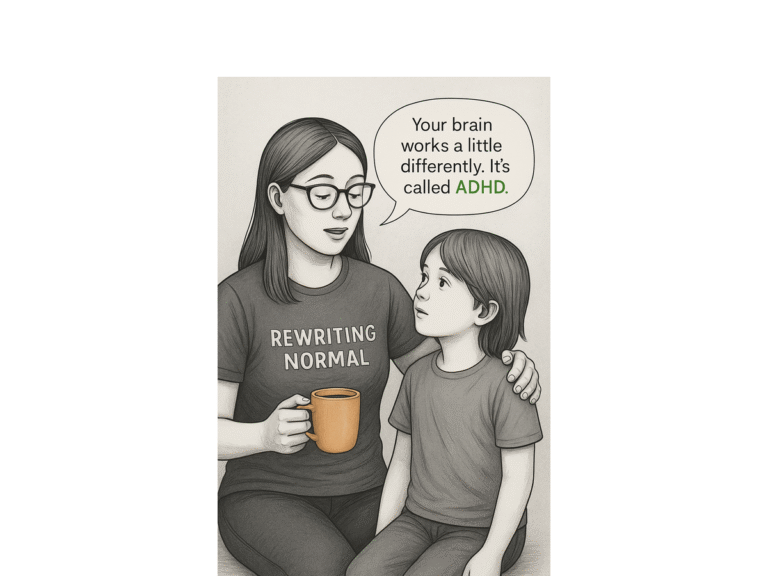
ADHD is a brain-based difference.
It affects things like:
- Attention — especially sustained attention on tasks that are boring or repetitive
- Impulse control — speaking or acting without thinking it through
- Emotional regulation — big feelings that rise quickly and take time to settle
- Working memory — keeping track of multiple steps, instructions, or priorities
- Motivation and activation — starting things, even things they want to do
But it’s not just about being “distracted” or “hyper.” ADHD affects how the brain filters information, processes rewards, and manages energy across the day. It’s about brain wiring — not willpower.
ADHD isn’t caused by bad parenting or too much screen time.
It’s not a new thing, either. We just understand it better now. We’re better at spotting it. We’ve moved beyond just recognising the “stereotypical hyperactive boy” and now know that ADHD can look completely different across children — especially girls, sensitive kids, or those who mask.
ADHD isn’t a behaviour problem.
It’s a regulation difference. And when kids don’t yet have tools for regulating their attention, emotions, or energy — those differences show up in behaviour.
That’s not an excuse. It’s a lens. And once you understand the lens, everything else becomes easier to respond to.
Coming soon: ADHD, Explained
A clear, lived-experience-based guide that helps you understand ADHD from the inside out — without jargon or judgement. It’s currently being formatted and will be available on the Tools page soon.