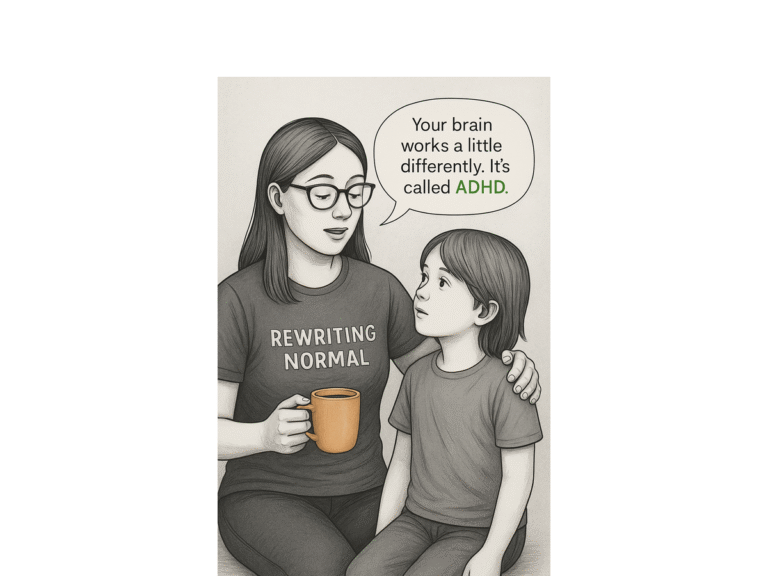

How do I explain ADHD to my child?
You’ve got the words now — ADHD. But your child might not. And even if they’ve heard the term, they’re still looking to you to tell them what it means. This can feel huge. But you don’t have to say it perfectly. You just have to say it in a way that feels safe.
First: ADHD isn’t a flaw to hide. It’s a brain difference to understand.
Start with that belief. Even if you’re still working on fully believing it yourself. Kids are great lie detectors. They will hear hesitation, shame, or avoidance, and they’ll mirror it. The more calmly and honestly you talk about ADHD, the more confidence you give them to make sense of their own story.
Then: Pick a metaphor that fits.
Some families talk about ADHD like a race car brain with bicycle brakes. Others use ideas like an octopus juggling or a brain full of tabs open at once. You don’t need to find the perfect metaphor. Just something real enough that your child can picture it. Something that doesn’t make them feel broken.
And be willing to try a few. Ask what makes sense to them. Use their interests — Pokémon brains, Minecraft attention, whatever works.
Be plain. Be kind. Be curious.
Here’s a simple version that might work for a lot of kids:
“ADHD means your brain works in some really cool ways, and some challenging ways, too. It might be harder for you to focus at times, or stay still, or stop your thoughts from zooming. It also might mean you see things other people miss, or get amazing ideas. You’re not in trouble, we’re just learning how to help your brain work its best.”
That’s the heart of it. Real, respectful, and not overwhelming.
Avoid these traps:
- Avoid calling it a superpower unless your child resonates with that language. For many, it’s confusing or frustrating.
- Avoid saying it’s no big deal, if your child is struggling, that minimises it.
- Avoid framing it as “you’re special” in a way that isolates or sets them apart from others.
Instead: focus on the fact that every brain is different. And we all learn better when we understand how ours works.
When it’s time for more detail:
As your child grows, so can the explanation. Older kids might want to know about dopamine, regulation, or medication. Keep things honest but paced. If you don’t know the answer to a question? Say so. Then look it up together. That’s a powerful moment of shared learning.
A few signs the explanation has landed well:
- Your child asks a follow-up question
- They relate it to something they’ve felt
- They don’t look panicked or shut down
- They want to know more about what helps
If the conversation ends quickly or your child gets overwhelmed, that’s okay too. You’ve opened the door. It’s a start.
In short:
- Keep it simple
- Stay honest
- Leave room for questions
- Focus on how their brain works — not what’s “wrong” with it
You’re not delivering a diagnosis like bad news. You’re giving them language, power, and clarity, and that’s a gift.