I’m Over Ableism in Professional Clothing
I’m over the way ableism shows up in spaces that call themselves inclusive.
I’m over the tone police, the voice snobs, the unspoken rules about what makes you “credible” as if clarity, softness, or support tools mean you’re not serious, smart, or strategic.
I’m over leadership advice that punishes emotion while applauding assertiveness – so long as it comes from the right mouth, in the right tone, wrapped in the right language.
I’m over the people who say “just be yourself” while rewarding the people who mask best. I’m over ableism in professional spaces.
I’m over pretending that using AI to get started, voice notes to write, captions to process, or checklists to remember is somehow cheating.
I’m over seeing neurodivergent insights written off as inconvenient, too intense, or “not the right time” because they don’t come with a LinkedIn-ready delivery.
I’m over being told that I should sound more like someone else in order to be heard.
I’m over the idea that vanilla isn’t a flavour. That if your writing doesn’t have punch, shock, or bite, it isn’t worth reading.
I’m over the double standard that rewards boldness from charmers and punishes it from truth-tellers.
I’m over people confusing elitism with excellence.
And I’m definitely over watching people with lived experience get dismissed while those with perfect pitch get the mic.
If you need scaffolding to write? You’re still a writer. If you communicate differently? Your voice still matters. If you’re not loud? You’re not invisible.
Your worth doesn’t depend on your polish. Your insight doesn’t expire if you need support to share it.
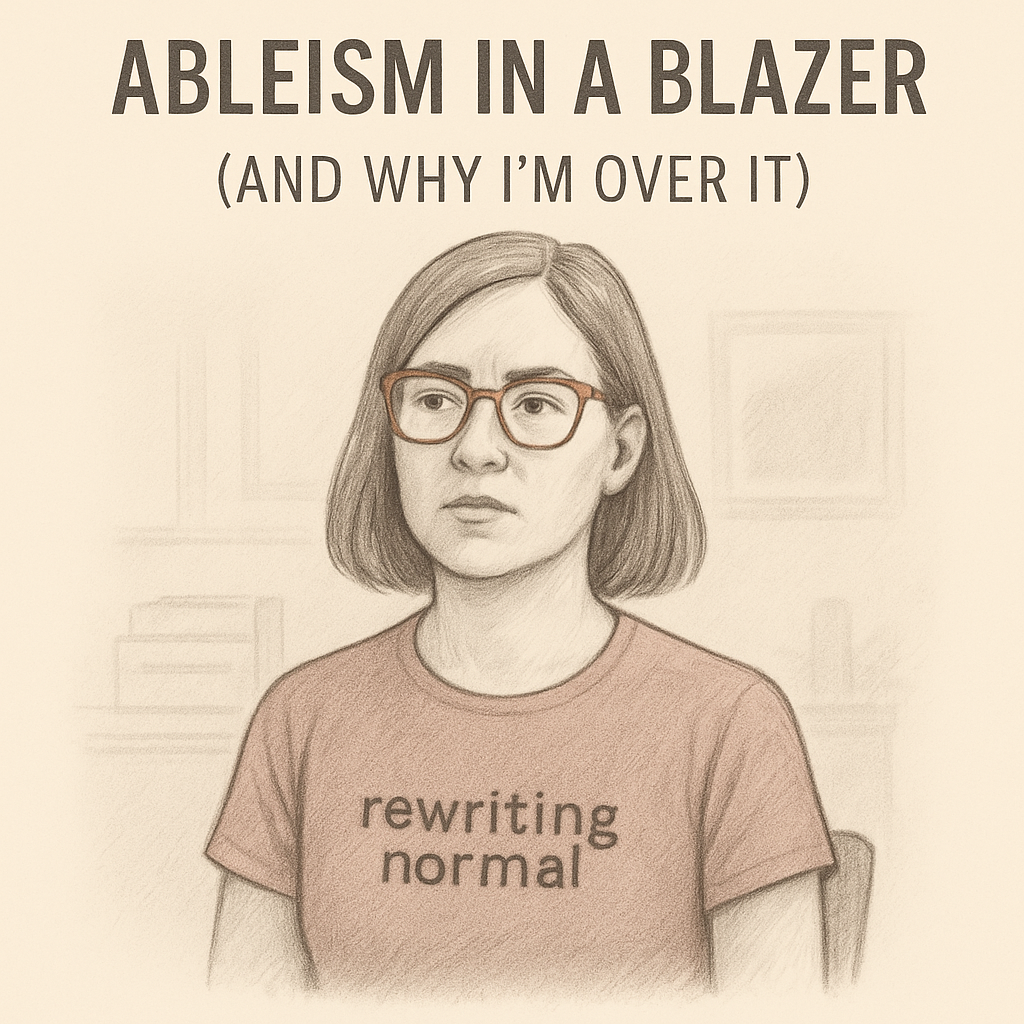
This is what ableism looks like when it puts on a blazer and calls itself feedback. And I’m over it. I’m over ableism in professional spaces!
This is why I write Rewriting Normal. Because it’s okay to live and work with our ADHD brains, not against them, because “normal” is supposed to be another way.
Ableism Doesn’t Always Look Like Exclusion
This isn’t just a personal gripe. It’s part of a wider pattern – one that’s been named and explored by others, too. Ableism doesn’t always show up as outright exclusion. Sometimes it hides behind “professionalism,” tone feedback, or who gets listened to in meetings. If you want a deeper look at how this plays out in the workplace, I highly recommend this article from HBR: What You Need to Know About Ableism at Work.